
6 photos — tap any to enlarge
Remanufactured Mazda 2.5L V6 Engine - Millenia
2.5L · V6 · Part 624C
Request a quote
We'll confirm availability and your price on this remanufactured engine — warrantied, with a refundable core.
Call for availability
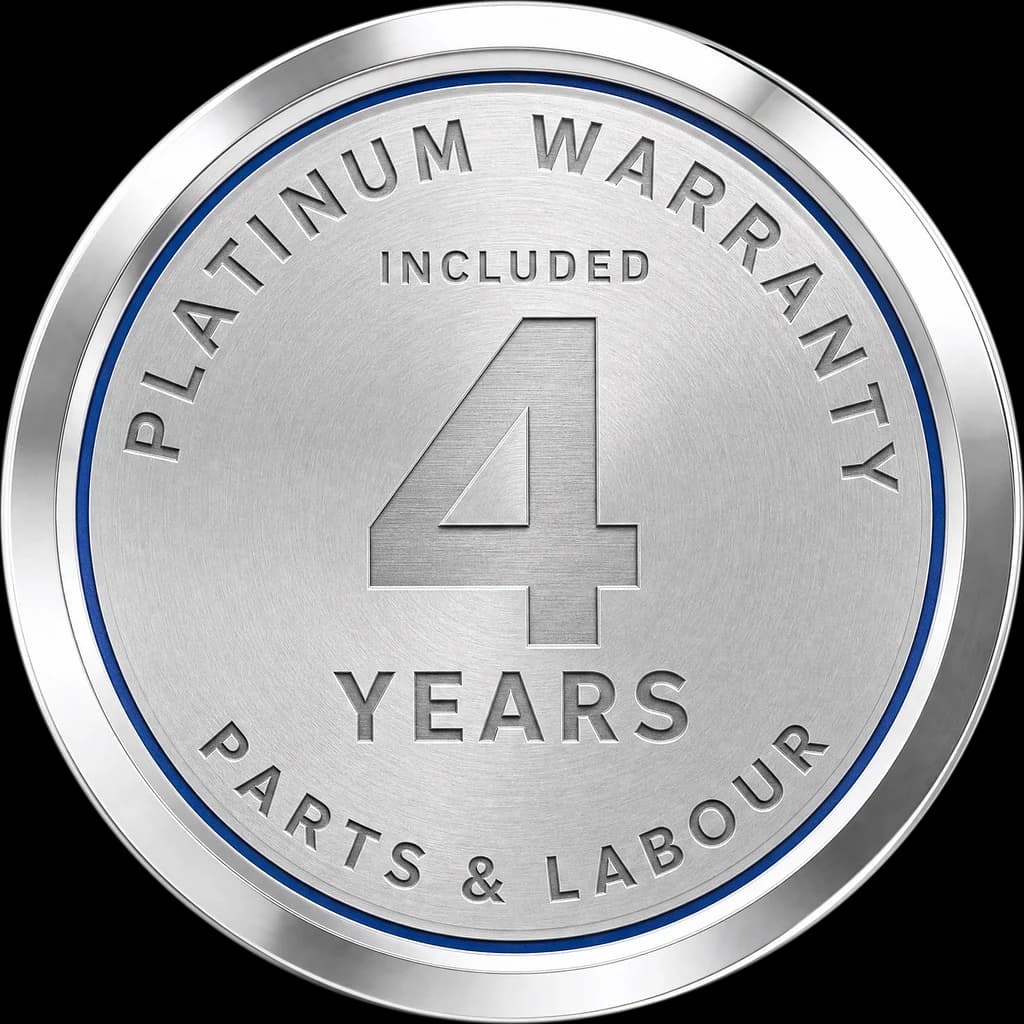
4-year no-fault nationwide warranty — includedOn gas engines in non-commercial use, at no extra charge. The builder’s standard cover is 3 years, parts only. Every gas engine we sell includes the 4-year no-fault warranty with labour, at no extra charge.
- “No fault” means we do not investigate why it failed — if a covered engine fails inside the term, it is covered.
- Labour is paid up to CAD $95.00 per hour — a cap on the rate, not a flat payout — and only for the remove-and-replace hours in the Mitchell labour guide. Diagnostic time is covered up to 2 hours, and fluids up to CAD $200.00. Towing and a rental car are not covered. Anything not listed here needs to be agreed with us before the work starts.
- The 4 years start the day the engine is installed, and a claim needs proof that a professional shop installed it.
- Unlimited kilometres, and no deductible.
- Call us before any warranty work starts, so we can authorise it. Labour paid on a repair we were not asked about first is not covered.
- A claim starts with a call to us. We file it with the manufacturer, and the manufacturer pays it.
Diesel engines, and engines put into commercial service, are not covered by this 4-year warranty — the terms vary by engine, so call us for the terms on the unit you’re pricing.
Fits
- Mazda Millenia 1996–2002 · 2.5L V6
Not sure it fits? Call (780) 473-2424 with your VIN and we'll confirm.
4-year warranty included
Refundable core
Ships Canada-wide
Engine guide
Mazda K-Series V6 (1.8 / 2.3 / 2.5)
Also known as: K-series, K8, KL, KJ, KL-ZE, KJ-ZEM, Miller-cycle 2.3, 1.8 V6
Overview & history
The K-series is one of the more unusual engine families of the 1990s, because Mazda built it in sizes that almost nobody else attempted. The headline member is the K8, a 1.8-litre V6 — at the time one of the smallest production V6 engines ever built — which Mazda put in the MX-3 Precidia, a compact hatchback that had no business having six cylinders at all. At the other end sat the KL, a 2.5-litre V6 that powered the 626, MX-6 and the Ford Probe GT, making around 164 horsepower and giving those cars a much smoother character than the fours they replaced. The most technically ambitious version was the KJ-ZEM, a 2.3-litre supercharged engine using the Miller cycle, fitted to the Mazda Millenia S. The Miller cycle keeps the intake valve open into the compression stroke and uses a supercharger to make up the lost charge, producing 2.5-litre-class output with reduced pumping losses. It remains one of the very few Miller-cycle engines ever sold in a mainstream passenger car.
Specs & engineering
- •Aluminum block and aluminum cylinder heads — a compact, light V6 designed for transverse front-drive installation.
- •60-degree V6 with double overhead camshafts and four valves per cylinder.
- •Belt-driven camshafts.
- •Three displacements here: 1.8L (K8), 2.3L (KJ) and 2.5L (KL).
- •The 2.3L KJ-ZEM uses the Miller cycle with a Lysholm-type supercharger and an intercooler.
- •Output ranged from roughly 130 hp (1.8L K8) to 164 hp (2.5L KL) and about 210 hp for the supercharged Miller-cycle 2.3.
Generations & variants
- •K8 1.8L (1992-1995): the MX-3 Precidia — one of the smallest V6 engines ever put in a production car.
- •KL 2.5L (1993-2002): the 626, MX-6, Ford Probe GT and Mazda Millenia.
- •KJ-ZEM 2.3L Miller cycle (1995-2002): supercharged and intercooled, exclusive to the Mazda Millenia S.
Vehicles it powered
- •Mazda MX-3 (1992-1995)
- •Mazda 626 (1993-2002)
- •Mazda MX-6 (1993-1997)
- •Ford Probe GT (1993-1997)
- •Mazda Millenia (1995-2002)
Did you know?
- ★The 1.8-litre K8 is among the smallest-displacement production V6 engines ever built, and Mazda put it in a compact hatchback.
- ★The Millenia S used a Miller-cycle supercharged 2.3 — one of the only Miller-cycle engines ever sold in a mainstream car, and a genuine engineering curiosity.
Sources: [1]