
6 photos — tap any to enlarge
Remanufactured GM 3.6L V6 Engine
3.6L · V6 · Part DCVW2
Call for availability
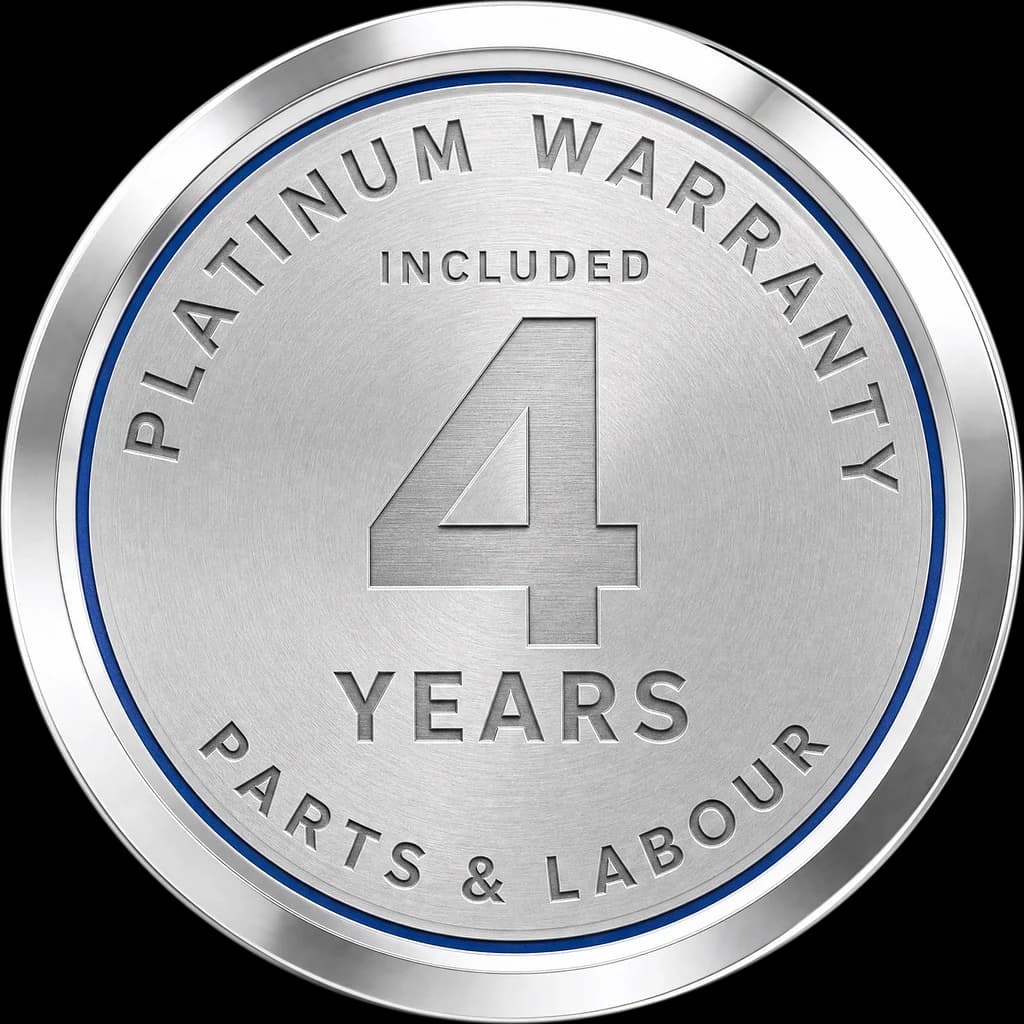
4-year no-fault nationwide warranty — includedOn gas engines in non-commercial use, at no extra charge. The builder’s standard cover is 3 years, parts only. Every gas engine we sell includes the 4-year no-fault warranty with labour, at no extra charge.
- “No fault” means we do not investigate why it failed — if a covered engine fails inside the term, it is covered.
- Labour is paid up to CAD $95.00 per hour — a cap on the rate, not a flat payout — and only for the remove-and-replace hours in the Mitchell labour guide. Diagnostic time is covered up to 2 hours, and fluids up to CAD $200.00. Towing and a rental car are not covered. Anything not listed here needs to be agreed with us before the work starts.
- The 4 years start the day the engine is installed, and a claim needs proof that a professional shop installed it.
- Unlimited kilometres, and no deductible.
- Call us before any warranty work starts, so we can authorise it. Labour paid on a repair we were not asked about first is not covered.
- A claim starts with a call to us. We file it with the manufacturer, and the manufacturer pays it.
Diesel engines, and engines put into commercial service, are not covered by this 4-year warranty — the terms vary by engine, so call us for the terms on the unit you’re pricing.
Add an install kit. Thermostat, water pump, belts, hoses, filters, plugs and leads — the parts that should not go back on a new engine. Ask for one with this engine and we quote it on the same order. What a proper install replaces
Warranty included — terms above
Core deposit refunded on return
Call us to confirm availability before you count on a date.
Shipping is freight-quoted after purchase, or pick up free in Edmonton.
Fits
- GM · 3.6L V6
Not sure it fits? Call (780) 473-2424 with your VIN and we'll confirm.
4-year warranty included
Refundable core
Ships Canada-wide
Engine guide
GM 3.6L High Feature V6 (LY7 / LLT / LFX)
Also known as: HFV6, Alloytec (Holden), 3.6 VVT, 3.6 SIDI
Overview & history
GM's High Feature V6 — HFV6 for short — arrived in 2004 as a clean-sheet, all-aluminum DOHC V6 developed jointly by Cadillac in Detroit and Holden in Australia. It debuted in the first-generation Cadillac CTS and the Holden VZ Commodore (where Holden badged it "Alloytec") and quickly became GM's do-everything six: Cadillac sedans, the Lambda crossovers (Enclave, Traverse, Acadia, Outlook), and eventually the Camaro. There's a home-team angle for Canadian buyers, too — the bulk of North American HFV6 production came out of GM's St. Catharines, Ontario engine plant, with additional lines in Michigan and Mexico. The family evolved in three broad steps. The original port-injected LY7 (2004–2011) made about 255 hp in the CTS. The LLT of 2008 added direct injection — roughly 15% more power and 3% better fuel economy — and earned Ward's 10 Best Engines honours. The LFX of 2012 shaved 20.5 lb with integrated exhaust manifolds and a composite intake, reaching 323 hp in the Camaro; twin-turbo LF3/LF4 offshoots later pushed the same architecture to 464 hp in the ATS-V. Early versions had a well-known appetite for timing chains — covered honestly below — which is exactly the kind of thing a proper remanufacture puts right.
Specs & engineering
- •60-degree V6 with aluminum block and aluminum DOHC cylinder heads; 24 valves (4 per cylinder) across the family
- •3,564 cc from a 94.0 mm bore and 85.6 mm stroke; 10.2:1 compression on the port-injected LY7
- •Continuously variable cam phasing on both intake and exhaust cams — full four-cam VVT, advanced for 2004
- •Forged, fillet-rolled crankshaft and sinter-forged connecting rods for bottom-end strength
- •Piston-cooling oil jets, twin knock sensors, coil-on-plug ignition and electronic throttle on most versions
- •LY7: sequential multi-port injection with a variable-length intake manifold; about 255 hp at launch
- •LLT (2008): spark-ignition direct injection (SIDI) — roughly 15% more power and 8% more torque than the LY7
- •LFX (2012): 20.5 lb lighter than the LLT via integrated exhaust manifolds and composite intake; up to 323 hp
Generations & variants
- •LY7 (2004–2011) — original port-injected 3.6L, roughly 252–275 hp; sold by Holden as the "Alloytec"
- •LLT (2008–2011) — direct-injected 3.6L, debuted on the 2008 Cadillac CTS/STS; Ward's 10 Best Engines winner
- •LFX (2012–2017) — refined LLT: lighter, integrated exhaust manifolds, up to 323 hp; replaced both earlier 3.6s
- •LF3 / LF4 (2014+) — twin-turbo offshoots: 420 hp in the XTS/CTS Vsport, 464 hp in the Cadillac ATS-V
- •Smaller-displacement siblings — 2.8L (LP1) and 3.0L (LF1/LFW) share the same High Feature architecture
- •LGX (2016+) — fourth-generation 3.6L successor with cylinder deactivation; a 2016 Ward's 10 Best winner
Vehicles it powered
- •Cadillac CTS (2004–2011)
- •Cadillac STS (2005–2011)
- •Cadillac SRX (2004–2016)
- •Cadillac ATS (2013–2016)
- •Buick Enclave (2008–2017)
- •Buick LaCrosse / Allure (2005–2016)
- •Chevrolet Traverse (2009–2017)
- •Chevrolet Camaro (2010–2015)
- •Chevrolet Impala (2012–2019)
- •GMC Acadia (2007–2016)
- •Saturn Outlook (2007–2010)
- •Holden Commodore VZ/VE (2004–2013, as Alloytec)
Known issues & fixes
Timing chain stretch (LY7 and 2008–2011 LLT)
What to watch for: Rattle at cold start and cam/crank correlation codes (P0008, P0009, P0016–P0019), most common on 2007–2011 engines that ran long oil-change intervals.
The fix: Replace chains, guides and tensioners with the updated later-style parts, then keep oil changes short (5,000–8,000 km) with dexos1 full synthetic — GM shortened its own oil-life monitor and extended chain coverage to 10 years/120,000 miles under special coverage 11340C. A quality reman engine gets the updated timing set from day one.
Intake-valve carbon buildup (direct-injected LLT/LFX)
What to watch for: Rough cold idle, random misfire codes and gradual loss of pep, typically around 130,000–160,000 km. DI engines don't wash the valve backs with fuel, so deposits accumulate.
The fix: Walnut-shell blasting of the intake ports and valves restores airflow; regular oil changes and a healthy PCV system slow the buildup.
Water pump seepage
What to watch for: Slow coolant loss with no obvious puddle, a coolant smell, or gradual overheating at higher mileage.
The fix: Replace the pump — access requires significant front-of-engine disassembly, so pair it with any timing chain job to save labour.
Cam phaser / actuator solenoid faults
What to watch for: VVT-related codes and uneven idle, often triggered by degraded oil restricting the phaser oil passages.
The fix: Replace the affected actuator solenoids and stick to clean full-synthetic oil — the four-cam VVT system lives and dies by oil quality.
Did you know?
- ★The racing version of this family — the twin-turbo LF4.R in the Cadillac ATS-V.R — made around 600 hp and won the Pirelli World Challenge drivers' championship in its very first season (2015).
- ★Most North American 3.6 High Feature engines were built in Canada, at GM's St. Catharines, Ontario powertrain plant.
- ★In Australia the same basic engine was badged "Alloytec" and powered Holden Commodores for a decade — a genuinely global engine built on three continents.
- ★The direct-injected LLT made Ward's 10 Best Engines in back-to-back years (2008–2009), and its LGX descendant repeated the honour in 2016.