
6 photos — tap any to enlarge
Remanufactured Ford 5.0L V8 Engine - Bronco (Full-Size), Country Sedan, Country Squire, Custom, Custom 500, E-Series Vans, F- Series Trucks, Fairlane, Falcon, Galaxie 500, Gran Torino, LTD, Maverick, Mustang, P-350, Ranch Wagon, Ranchero, Torino; Mercury Comet, Cougar, Cyclone, Montego
5.0L · V8 · Part DFXD
Request a quote
We'll confirm availability and your price on this remanufactured engine — warrantied, with a refundable core.
Call for availability
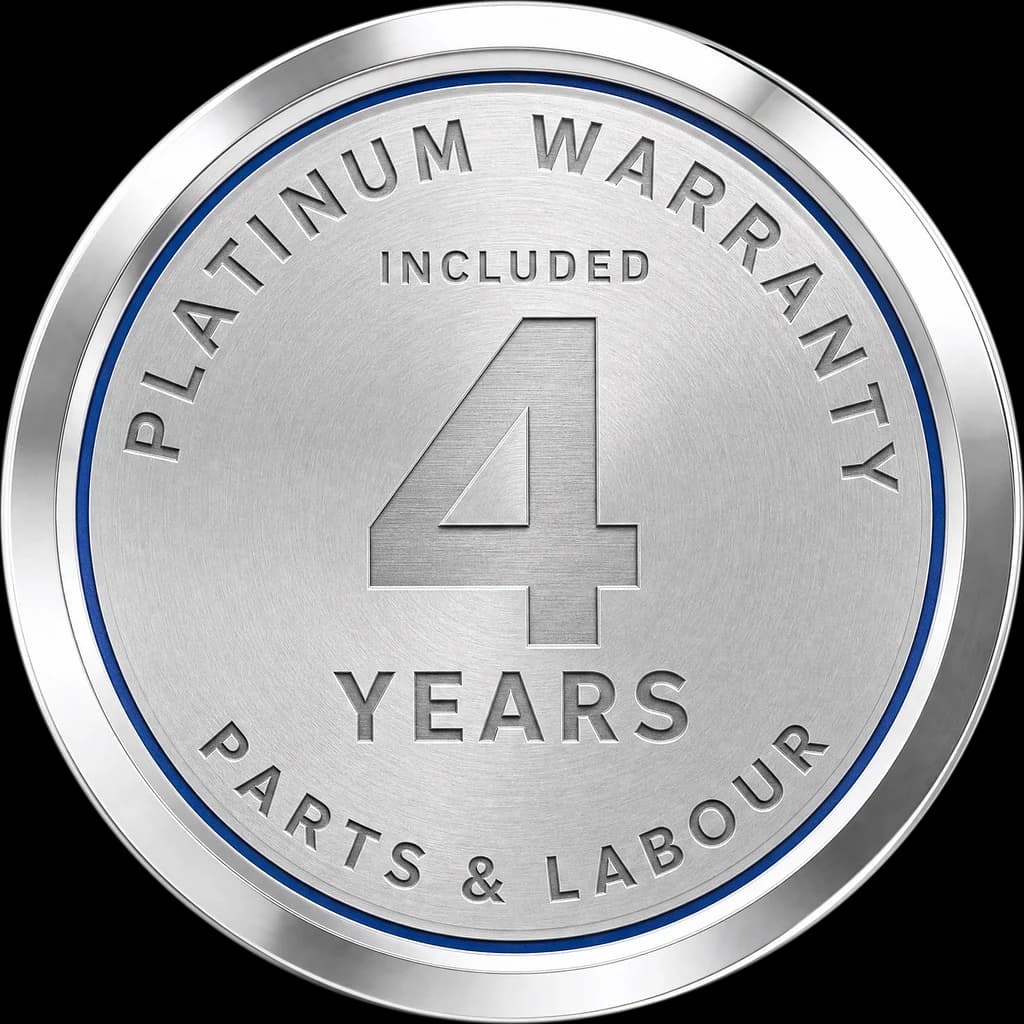
4-year no-fault nationwide warranty — includedOn gas engines in non-commercial use, at no extra charge. The builder’s standard cover is 3 years, parts only. Every gas engine we sell includes the 4-year no-fault warranty with labour, at no extra charge.
- “No fault” means we do not investigate why it failed — if a covered engine fails inside the term, it is covered.
- Labour is paid up to CAD $95.00 per hour — a cap on the rate, not a flat payout — and only for the remove-and-replace hours in the Mitchell labour guide. Diagnostic time is covered up to 2 hours, and fluids up to CAD $200.00. Towing and a rental car are not covered. Anything not listed here needs to be agreed with us before the work starts.
- The 4 years start the day the engine is installed, and a claim needs proof that a professional shop installed it.
- Unlimited kilometres, and no deductible.
- Call us before any warranty work starts, so we can authorise it. Labour paid on a repair we were not asked about first is not covered.
- A claim starts with a call to us. We file it with the manufacturer, and the manufacturer pays it.
Diesel engines, and engines put into commercial service, are not covered by this 4-year warranty — the terms vary by engine, so call us for the terms on the unit you’re pricing.
Fits
- Ford Bronco (Full-Size), Country Sedan, Country Squire, Custom, Custom 500, E-Series Vans, F- Series Trucks, Fairlane, Falcon, Galaxie 500, Gran Torino, LTD, Maverick, Mustang, P-350, Ranch Wagon, Ranchero, Torino 1968–1974 · 5.0L V8
Not sure it fits? Call (780) 473-2424 with your VIN and we'll confirm.
4-year warranty included
Refundable core
Ships Canada-wide
Engine guide
Ford Windsor Small-Block V8 (289/302/351W)
Also known as: Ford small-block V8, Windsor V8, 5.0 pushrod V8, 351W
Overview & history
Ask anyone at a parts counter about a "Windsor" and you're talking about Ford's most successful V8 family. Introduced in July 1961 for the 1962 Fairlane, the small-block replaced the heavy Y-block with a thin-wall cast-iron design that was light, compact, and endlessly adaptable. The name comes from the Windsor, Ontario engine plant across the river from Detroit — a Canadian-built engine from the start, though Cleveland's plants poured millions too. The family began at 221 cubic inches, grew to 260, then hit its stride as the 289 in 1963. A longer 3.00-inch stroke created the 302 (5.0L) in 1968, and a taller-deck 351 Windsor followed in 1969. Production ran nearly four decades: the 351W until 1996 and the 302 until 2001 in the Ford Explorer — roughly forty years of Mustangs, F-Series trucks, Broncos, vans, and family wagons. Windsor Engine Plant No. 1 alone built about 8.6 million 351W engines. That longevity is the reman buyer's friend: the parts supply is enormous, the architecture is thoroughly understood, and the weak points are well documented. Whether you're replacing a tired 5.0 in a '90s F-150 or a 351W in a full-size Bronco, this is one of the best-supported engines ever built.
Specs & engineering
- •90-degree OHV pushrod V8 with cast-iron block and heads; Ford's thin-wall casting technique kept weight low for its era.
- •Two valves per cylinder with flat-tappet cams originally; factory roller lifters arrived in 1985 on the 302 and 1994 on the 351W.
- •Shared 8.206-inch deck height for 289/302; the 351W uses a taller 9.480-inch (1969-70) or 9.503-inch (1971-96) deck with bigger 3.00-inch main journals.
- •Firing order differs within the family: standard 289/302 use 1-5-4-2-6-3-7-8, while the 351W and 302 H.O. use 1-3-7-2-6-5-4-8 — cam and plug wiring must match.
- •Early blocks (through mid-1965) use a 5-bolt bellhousing; later blocks use the common 6-bolt pattern — critical when matching transmissions to 1964-65 cores.
- •Fueling evolved from carburetors to central fuel injection, then sequential EFI on the 1986+ 5.0 H.O. with mass-air metering from 1989.
- •GT40 and GT40P high-flow iron heads appeared on 1993-95 Mustang Cobras and late Explorer 5.0s — a popular factory upgrade path.
- •Displacements grew by stroke and deck, not bore family changes: the 302 is essentially a long-stroke 289, and the 351W adds deck height and a 3.50-inch stroke.
Generations & variants
- •221 and 260 V8 (1962-1964) — the original Fairlane-sized versions that launched the family.
- •289 (1963-1968) — the classic Mustang-era engine, including the solid-lifter 271-hp "K-code" HiPo (1963-1967, about 25,000 built).
- •302 / 5.0L (1968-2001) — the long-runner; includes the Boss 302 (1969-70, Cleveland-style heads) and the fuel-injected 5.0 H.O. (1982-1995), finishing in the Explorer through 2001.
- •351 Windsor (1969-1996) — taller-deck, heavier-duty version favoured in trucks, vans, and full-size Fords.
- •Related but NOT the same family: the 351 Cleveland, 351M, and 400 are Ford's separate "335-series" engines — parts do not interchange despite the shared 351 displacement.
Vehicles it powered
- •Ford Mustang (1964.5-1995)
- •Ford F-Series trucks (1965-1996)
- •Ford Bronco full-size (1966-1996)
- •Ford E-Series/Econoline vans (1969-1996)
- •Ford Fairlane/Torino (1962-1976)
- •Ford Galaxie/LTD (1963-1978)
- •Ford Country Squire wagons (1960s-1980s)
- •Mercury Cougar (1967-1973)
- •Ford Granada (1975-1980)
- •Ford Explorer 5.0 (1996-2001)
- •Mercury Mountaineer 5.0 (1997-2001)
- •Shelby GT350 and AC Cobra (1963-1967, 289)
Casting numbers
| C3OE-B | 1963 289 block, 2-bolt mains, 5-bolt bellhousing, Hi-Po |
| C4OE-F | 1964 289 Hi-Po block, 2-bolt mains, 5-bolt bellhousing, manual |
| C5AE-A | 1965-1968 289 block, 2-bolt mains, 6-bolt bellhousing |
| C8OE | 1968-1970 302 block, 2-bolt mains (truck and car versions C8OE-A/B) |
| C9OE-B | 1969-1970 351W block, 2-bolt mains |
| C5OE-A | 1965-1967 289 Hi-Po cylinder head, 1.78/1.45 valves, 54.5cc chambers |
| C7OE-C | 1967-1970 302 cylinder head, 1.78/1.45 valves, 63cc chambers |
| E7TE-PA | 1987-1995 5.0 cylinder head, 1.78/1.45 valves, 66cc chambers (common Mustang GT/truck head) |
| C9OE-B/D/E | 1969-1974 351W cylinder head, 1.84/1.54 valves, 60.4cc chambers |
Known issues & fixes
Nylon-tooth timing gear failure (1960s-70s originals)
What to watch for: Rattle at cold start, retarded ignition timing, plastic debris in the oil pan; shed teeth can clog the oil pickup and starve the bearings.
The fix: Replace with an all-steel double-roller timing set — standard practice in a quality remanufacture, so a reman engine puts this one to bed.
Rear main seal oil leaks
What to watch for: Drips at the bellhousing joint, oil on the flexplate; worse on engines that sit unused, since the seal dries and cracks.
The fix: Replace the seal (early engines use a two-piece design, 1982+ 302s a one-piece), and confirm the PCV system works so crankcase pressure isn't pushing oil past it.
Cracked exhaust manifolds on 351W trucks
What to watch for: Ticking on cold start that fades as the engine warms, exhaust smell in the cab; commonly appears around 120,000 miles.
The fix: Replace the manifolds with fresh hardware — or upgrade to aftermarket manifolds/headers when the engine is out for replacement.
Intake manifold bolts loosening or breaking (351W)
What to watch for: Lean idle or vacuum leaks, oil seepage at the front and rear of the intake valley from repeated heat cycles.
The fix: Retorque the intake in sequence; use quality gaskets with proper end seals when reinstalling the manifold on a fresh engine.
Firing-order mix-ups on swaps
What to watch for: No-start, backfiring, or rough running after an engine or cam swap — the 351W and 302 H.O. fire 1-3-7-2-6-5-4-8, standard 302s fire 1-5-4-2-6-3-7-8.
The fix: Confirm which firing order the installed camshaft uses and wire the distributor cap to match; never assume based on displacement alone.
Did you know?
- ★The small-block Windsor won the 24 Hours of Le Mans outright twice — 1968 and 1969 — powering the JWAE Ford GT40s with the 302.
- ★The 271-hp 289 HiPo "K-code" powered Shelby GT350s and AC Cobras, and carried Ford to Trans-Am manufacturers' championships in 1965 and 1966.
- ★It's a Canadian success story: named for the Windsor, Ontario engine plant, where Plant No. 1 alone cast roughly 8.6 million 351W engines.
- ★The famous "5.0" badge rounds up — 302 cubic inches works out to 4.94 litres, but Ford badged it 5.0 to set it apart from the 4.9L inline-six in its trucks.